The basic kit at a glance
Watch care is often sold with huge toolboxes in which half the parts are never used. The truth is pleasantly unspectacular: for everything you can safely do on your watch yourself, four to five items are enough. This overview shows what belongs in the drawer and what you can happily leave on the shelf.
| Tools | Purpose | Price range | Do you need it? |
|---|---|---|---|
| Spring bar tool | Changing the strap, adjusting bracelets | low-priced | Yes, the most important tool |
| Microfibre cloth | Fingerprints, everyday dirt | low-priced | Yes |
| Blower bulb | Dust from crevices, before wiping | low-priced | Yes, prevents wiping scratches |
| Soft mat / watch cushion | Scratch-free working | low-priced | Yes, a microfibre cloth will do in a pinch |
| Polishing cloth for stainless steel | Masking fine hairline scratches | low-priced | Optional, with caution |
| Headband holder for the loupe | Holding the loupe in front of the eye hands-free | low-priced | Only if you work with a loupe anyway |
| Link remover for metal bracelets | Removing links | affordable to mid-range | Only if you buy a metal bracelet |
| Case opener | Opening the case back | Mid-range | No, a watchmaker's job |
| Screwdriver set | Screwed lugs, clasps, link screws | Mid-range to premium | Only if your strap is screwed on |
The recommendations in detail

Bergeon 6767-F spring bar tool
- The workshop standard of watchmakers: a precisely made fork that does not slip
- Interchangeable tips (replacement forks available individually), so it is practically unlimited in use
- Grippy stainless steel body in a comfortable length for controlled pressure
- More expensive than no-name sets, but bought once instead of replaced three times
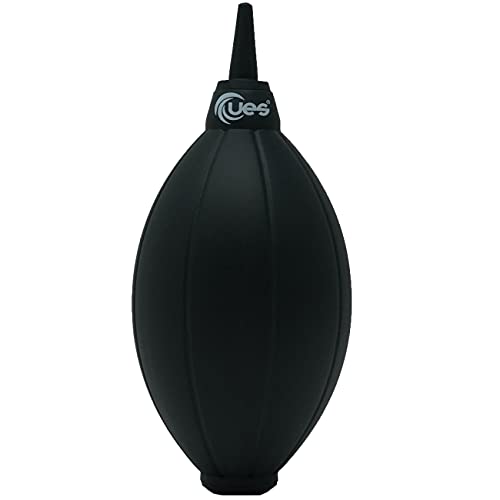
UES AB09 blower
- Blows dust and crumbs out of the bezel gap and bracelet links without touching the watch
- The soft silicone tip prevents scratches in case you do make contact
- Borrowed from camera care, but does exactly the same job on a watch

Bergeon 5461 headband holder for watchmaker's loupes
- Holds the classic watchmaker's loupe on the head in front of the eye, instead of wedging it between eyebrow and cheek: both hands stay free
- Band made of springy stainless steel, according to specialist retailers suitable for all common loupe sizes and adjustable to the head by shortening or bending
- Very light and therefore unobtrusive even during longer work at a desk, made by Bergeon in Switzerland
- Purely a loupe accessory and not a tool for repairs: the loupe itself is not included and must be bought separately

Cape Cod polishing cloths
- Proven standard for masking fine hairline scratches on polished metal surfaces
- Resealable pouch keeps the impregnated cloths ready for use for a long time
- Abrasive: on brushed surfaces use only along the grain and sparingly; for valuable watches, the watchmaker's advice still applies

polyWatch Plastic Polish
- Polishes fine scratches out of acrylic and Hesalit crystals completely, with a cloth and two minutes of patience
- For decades the standard among vintage collectors, economical in use
- Works only on plastic crystals: mineral and sapphire crystals remain unaffected, and only the watchmaker can help there

JOREST watch tools set with watch press
- The included press closes press-fit case backs evenly, instead of you pushing the back on with the palm of your hand and tilting the case in the process
- Covers the three most common home jobs in one purchase: battery change, shortening the strap and replacing spring bars
- Case opener, press-fit tool and screwdrivers are in the same set, so the one part you need is not missing during reassembly
- Despite the press, opening water-resistant cases remains a watchmaker's job: without a new gasket and a pressure test, water resistance is no longer guaranteed afterwards

JOREST spring bar tool set with 56 pieces
- Alongside the tool, it includes a supply of spring bars from 16 to 26 mm, so a bent bar no longer stops a strap change
- The strap widths cover practically all common men's and women's watches, so you do not have to reorder a single size before the change
- A user manual is included, which, especially on your first strap change, makes the difference between clean work and scratches on the lugs
- Strap tool only: for battery changes or shortening metal links you will also need one of the larger sets

Heli BC-113026 microfibre watch cleaning cloth
- Heli supplies watchmaker supplies, so the cloth is finely woven and leaves no streaks on glass and polished steel
- At 40 x 40 cm it is much larger than the usual bundled cloths, so you always have a clean spot and do not rub dust back in
- Cleans glass, case and metal and leather straps without chemical additives and is washable up to 30 degrees, so it can be used for years
- A cloth is no substitute for polish: existing scratches will not disappear with it, and depending on the type of glass you need a dedicated product

Bergeon 30081-S09 screwdriver set
- Nine blade widths of 0.50, 0.60, 0.80, 1.00, 1.20, 1.40, 1.60, 2.00 and 2.50 millimetres cover everything screwed on a wristwatch, from the tiniest clasp pin to the link screw
- Each screwdriver comes with a spare blade of the same size, and the blades can be swapped individually: a bent driver is therefore not a total loss
- The heads are colour-coded and rotate on bearings, the stand also rotates and holds all nine handles plus spare blades on a footprint of around 10 by 5 centimetres
- This is professional tooling at a professional price. If you only occasionally change a spring bar strap, you do not need screwdrivers but the spring bar tool further up. For opening case backs, our recommendation remains unchanged: that belongs in the workshop
The spring bar tool: small, cheap, indispensable
Almost every watch strap sits between the lugs on two spring-loaded metal pins, the spring bars. The spring bar tool compresses these pins and is therefore the key to every strap change. A good tool has two tips: a fork for straps with exposed spring bar shoulders and a fine pin for cases with holes in the lugs.
What to look for when buying
What matters is the quality of the fork tip: it must be narrow enough to reach between strap and lug, and it must not slip under pressure, because that is exactly how the notorious scratches on the lugs happen. Tools with replaceable, hardened tips and a handle of decent diameter for controlled pressure are practical. Sets with spare spring bars in common widths make sense for beginners, because a tired spring bar is the most common reason for lost watches.
How to use it properly
Always work on a soft surface and with a steady hand: place the fork on the spring bar shoulder, compress the bar, and carefully swing the strap out of the lug. When fitting, first seat one side in the hole, then compress the second with the tool and let it click into place. Finally, check with a light pull that both bars sit securely. Once you have done it twice, you will change a strap in under five minutes.
Changing a watch strap: the quick guide
Changing the strap is the easiest way to give a watch a new character, from steel bracelet to summer NATO, from leather to rubber. Here is how to proceed:
- Prepare your workspace: bright surroundings, soft surface, place the watch face down on a clean cloth.
- Remove the old strap: compress the spring bar with the fork, swing the strap out, check the bars for wear and, if in doubt, replace them straight away.
- Fit the new strap: slide the spring bars into the new strap, hook in one side, and let the second side click into place with the tool.
- Check the fit: give both sides of the strap a short, firm tug. A strap that holds now will also hold on your wrist.
With straps that have quick-release spring bars, the tool is not needed at all; the small lever on the underside of the strap is enough. And while you are reorganising your collection: which strap width fits which case size is explained by our sister site in the watch size guide.
Cleaning and caring without risk
The everyday routine
It rarely takes more than two steps: first blow dust and crumbs out of crevices and the bezel gap with a blower, then wipe over with the microfibre cloth. The order matters, because rubbing dust in dry grinds fine scratches into the case. This one minute a week keeps any watch looking good, entirely without chemicals.
Cleaning metal straps thoroughly
Steel bracelets collect skin oil and dust in the links over time. On screw-down dive watches with an intact seal and a screwed-down crown, you may clean the bracelet under lukewarm water with mild soap and a soft brush, then dry it thoroughly. Watches with unclear water resistance, aged seals or a leather strap stay dry as a rule. When a seal check is due is one of the maintenance questions we address in the article on the winder and care question.
Leather straps
Leather lives and ages, and that is part of its charm. Its lifespan can be extended with simple rules: avoid water, let it air out after wearing, do not store it in direct sun, and give the watch an occasional strap-free day. A well-ventilated watch box is a better home for leather straps than the drawer where the strap lies squashed.
Polishing: the honest warning
No topic is underestimated as much as polishing. The physical truth: a scratch only disappears if the surrounding material is removed down to its depth. That is exactly what every polish does, whether cloth or paste. On brushed stainless steel, fine hairline scratches can be masked with a polishing cloth along the grain, and that is the one case in which doing it yourself is defensible.
Anything beyond that costs material: polished surfaces become wavy, edges round off, and on vintage watches an overzealous polish can drastically reduce the collector's value. Our recommendation is therefore conservative: accept hairline scratches or carefully mask them, have deep scratches refinished by a watchmaker, and ideally do not touch valuable watches at all. A scratch is a memory, a rounded-off edge is damage.
The exception: plastic crystals
There is one honest special case: acrylic and Hesalite crystals, as worn by many vintage watches and classics such as the Moonwatch. The material is soft enough that fine scratches can indeed be polished out completely with a plastic polish, and collectors have been doing exactly that for decades. On mineral or sapphire glass, however, such a polish achieves nothing; there only replacing the crystal at the watchmaker helps.
What you can skip
Case openers, movement holders, hand pullers: the tools for working on an open case are cheap to buy and expensive in their consequences. Without experience, cleanroom discipline and seal testing, a quick battery change often ends with dust in the movement, a scratched case back or a watch that fills with water in the next rain shower. The same applies to ultrasonic cleaners into which complete watches are placed: for movements and seals, that is poison.
Our advice: invest the money you save in good storage instead. A solid watch box against dust and scratches, a travel case for on the go or, for a growing collection, a watch winder for the rotation watches will do more for your collection than any tool case.
Conclusion: A small kit, clear limits
With a spring bar tool, microfibre cloth, blower and soft surface, you can do everything on a watch that is safe to do yourself: change straps, clean, care. The limit runs at the case back; beyond it begins the watchmaker's territory. Anyone who respects this limit will enjoy their watches for a long time and spend less on tools overall than on a single good strap.
The text of this page was created with an AI language model and was reviewed and approved editorially before publication. Editorial responsibility lies with Seydhan Cakmak. The product images shown are not AI images but manufacturer and retailer photos from the Amazon catalogue, which we embed unchanged.
A limitation we disclose: Amazon and the retailers selling there now use generative tools in their listings themselves. Whether an individual catalogue image is affected, we cannot check from the outside, so we claim it neither one way nor the other. As soon as an image demonstrably comes from a generative model, we label it visibly on the image with the label AI image. More on this on the AI transparency page.