At Jaeger-LeCoultre the winder question is answered wrongly particularly often, and there is a simple reason. The brand's best-known watch, the Reverso, carries a manual-winding movement in its classic form and does not benefit from a device in the slightest. At the same time, the manufacture from the Vallée de Joux builds automatic movements with calibres 899, 866, 751 and 956, for which a winder is very much worthwhile. We have ranked six devices on exactly this distinction and noted which turn values are documented and which are not.
The recommendations at a glance
| Model | Slots/type | Key feature | Price range | Rating |
|---|---|---|---|---|
| botta Cube | 1 position per module | 9 programmes from 600 to 1,800, approx. 14 decibels | upper mid-range | 4,2/5 |
| Barrington Single Watch Winder | 1 slot | 5 documented speed settings, battery operation | Mid-range | 4,2/5 |
| Beco Technic Boxy Carbon Single 1 | 1 position, modular | Belt drive, 3 programmes, 3 directions | Mid-range | 4,4/5 |
| ROTHWELL double watch winder | 2 slots | 5 settings and 3 directions per slot | Mid-range | 4,2/5 |
| Swiss Kubik Velour Windsor | 1 slot | certified noise values, battery operation only | Premium | 4,3/5 |
| WOLF Heritage Single | 1 position plus storage compartment | Lock-in Cuff up to 52 mm, 3 directions | Premium class | 4,0/5 |
The highest overall rating in the field goes to the Beco Technic Boxy, because drive, build quality and expandability fit together best in it. For Jaeger-LeCoultre, however, we put the botta Cube in first place, as its nine programmes cleanly cover the documented window of 800 to 950 for calibre 899. Behind it comes the Barrington Single, which brackets the same range with its 850 and 1,000 settings and stays cheaper. Large clamp holders deliberately rank further back for JLC, because a Master Control at 40 and a Polaris at 42 millimetres do not need an XXL system.
The devices in detail

botta Cube
- Nine programmes from 600 to 1,800 turns fully cover both the 800 to 950 documented for calibre 899 and the standard range of 650 to 800 for movements without a database entry
- All three directions of rotation are selectable, so you can set the anticlockwise rotation given in the database for the 899 or the bidirectional mode, which works in every case
- The direct drive without gearbox runs at around 14 decibels, almost inaudible, so the module can stand next to the bed without disturbing you at night
- Each additional module costs the full module price; if you want to supply a Master Control, a Polaris and a chronograph at once, a multi-watch cabinet works out cheaper
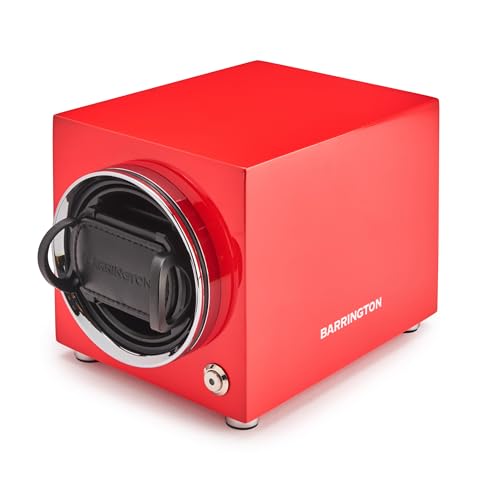
Barrington Single Watch Winder
- Five clearly documented speed settings at 650, 750, 850, 1,000 and 1,950 turns per day, plus clockwise, anticlockwise and alternating rotation instead of vague mode descriptions
- For a calibre 899, the 850 and 1,000 settings directly bracket the documented window of 800 to 950; for movements without an entry, the 650 setting fits
- Runs on the supplied power adapter or on two AA batteries; according to the manufacturer, one set lasts almost two months, which makes a safe an option too
- The standard cushion holds a Master Control or Polaris without any problem; with a rectangular Reverso Duetto, the support is less well matched to the case shape

Beco Technic Boxy Carbon Single 1 Classic
- The interval motor with belt drive does without a rattling gear train and, according to specialist retailers, offers three fixed programmes and all three directions of rotation
- Ready to use straight away as a complete device and at the same time the starting point of a system: if a Polaris is added to the Master Control later, you stack another Boxy module next to it
- The plastic case with acrylic glass dome stays under one kilogram, which makes it easier to move and to carry into the cabinet
- Beco Technic does not state the exact turns per programme in numbers; if you want to set the documented 800 to 950 exactly, you are better off with the botta Cube

ROTHWELL double watch winder
- Five speed settings and three directions of rotation can be set separately for each position, so a Master Control with calibre 899 can run anticlockwise next to a Master Chronograph with 751 in alternating mode
- This very combination is common at Jaeger-LeCoultre, because many collections consist of a three-hand watch and a chronograph, and it cannot be covered with a single device
- The wooden frame with PU leather cover and the red interior create an appearance that suits a manufacture watch from the Vallée de Joux better than a plain plastic class
- There is no battery compartment; the device needs a permanent power socket and is therefore ruled out for a closed safe

Swiss Kubik Velour Windsor
- Swiss Kubik is the only brand in the niche to state independently certified noise values, which is a real argument for the bedroom wardrobe in an industry full of advertising words
- Battery-only operation makes the device safe-compatible, because a drilled-in power feed-through destroys the safe's certification and often the insurance cover
- The run cycles can be programmed, so you deliberately set the 800 to 950 turns documented for calibre 899 instead of guessing them
- Manufacture price for a single position; if you want to supply a Master Control and a Polaris at once, you pay a very significant premium here

WOLF Heritage Single Winder
- The fixed 900 turns per direction lie in the middle of the 800 to 950 window that the database gives for calibre 899, so the device fits without any adjustment
- The patented lock-in holder snaps into the drum and actively clamps the case, which helps with a rectangular Reverso Classic Duetto with automatic calibre 968A
- The direction of rotation is selectable: clockwise, anticlockwise and bidirectional, so you can set the anticlockwise rotation mentioned for the 899 directly
- The holder is designed for cases up to 52 millimetres, which is larger than a JLC needs; in addition, the rotation speed cannot be finely adjusted
Turns per day for Jaeger-LeCoultre calibres
Jaeger-LeCoultre itself does not publish turn recommendations for watch winders. The settings databases of the winder manufacturers are therefore the reliable source. The watch-winder.store database lists numerous JLC calibres with concrete figures, but not the newer manufacture movements such as the 866 of the Master Control Calendar or the 761 of the Polaris Chronograph. We state this openly in the table instead of inventing figures.
| Calibre | Typical models | Recommended turns per day | Rotation direction |
|---|---|---|---|
| JLC 899, 899A and 899AC | Master Control Date 40 mm, Master Ultra Thin Date, Polaris Date 42 mm | 800 to 950 | anticlockwise according to the database; bidirectional is the safe choice |
| JLC 896 | flat automatic models of the Master line | 800 to 950 | anticlockwise |
| JLC 866 and 866AA | Master Control Calendar 40 mm with moon phase | no own entry: 650 to 800 | no documented figure, set to bidirectional |
| JLC 751, 751B and 751G (chronograph) | Master Chronograph, Master Control Chronograph | 650 to 950, exactly 800 for 751B | bidirectional |
| JLC 751D and 751E (chronograph) | other chronographs of the 751 family | 800 to 950 | anticlockwise |
| JLC 761 (chronograph) | Polaris Chronograph 42 mm | no own entry: 650 to 800 | no documented figure, set to bidirectional |
| JLC 956 (automatic alarm) | Master Control Memovox, Memovox Polaris | 800 to 950 | anticlockwise |
| JLC 968A | Reverso Classic Medium Duetto with automatic winding | no own entry: 650 to 800 | no documented figure, set to bidirectional |
| JLC 966 | Reverso Squadra Lady Duetto with automatic winding | 800 to 950 | anticlockwise |
| JLC 822 and 822A/2 | Reverso Tribute Monoface, Reverso Classic Monoface | Manual winding, no winder needed | not applicable, no rotor present |
| JLC 854 and 854A/2 | Reverso Tribute Duoface, Reverso Classic Duoface | Manual winding, no winder needed | not applicable, no rotor present |
Two things stand out. First, the database lists the modern JLC automatic movements unusually high at 800 to 950 turns, while many other brands get by with 650 to 800. Second, for several calibres it gives anticlockwise rotation, whereas some winder providers recommend bidirectional across the board. Where the sources contradict each other, bidirectional mode is the safe answer, because it includes the anticlockwise rotation and cannot harm the movement. All values from other manufacturers are in the complete table of turns per day.
Why the classic Reverso does not need a winder
This is the most important sentence on this page: a classic Reverso has no rotor. The movements of the Reverso Tribute and Reverso Classic are manual-winding calibres, above all the 822 with a height of 2.94 millimetres and 42 hours of power reserve, as well as the 854 of the Duoface. Jaeger-LeCoultre expressly describes these models on its own product pages as Manual Winding. A watch winder will dutifully turn such a watch in circles, but it does not wind the mainspring by a single turn, because there is no rotor.
The reason is the construction. The 822 is a shaped movement with a tonneau cut, designed specifically for the rectangular Reverso case of 1931, and today sits in a watch measuring 45.6 by 27.4 millimetres at a height of only 7.56 millimetres. An automatic module with a rotor would destroy this flatness, and that is exactly why it stays hand-wound. So you wind the watch by hand every morning, and that is not a shortcoming but part of its character.
There are exceptions, though, and you must separate them cleanly. Documented is the Reverso Classic Medium Duetto in the 40 by 24 millimetre format, which received the manufacture calibre 968A with automatic winding and 38 hours of power reserve, replacing a manual-winding movement there. Older versions such as the Reverso Squadra Lady Duetto with calibre 966 also run automatically; this movement is listed in the database with 800 to 950 turns, anticlockwise. The simplest check: if the dial or the papers say Automatic or Automatique, a winder is worthwhile; otherwise it is not.
What matters in a watch winder for Jaeger-LeCoultre
After the fundamental question of automatic or manual winding, the adjustable rotation count is the decisive purchase criterion. Because the database gives a high range of 800 to 950 for the JLC automatic movements, devices with a single low fixed setting are ruled out. Sensible are models where you programme freely, as with the botta Cube and Swiss Kubik, or choose from documented settings, as with the Barrington Single. If you can only choose between mode names without a figure, you do not know whether your movement is fully wound.
The holder is uncritical at Jaeger-LeCoultre as long as round cases are concerned. The Master Control Date measures 40 millimetres, the previous generation was 39, and the Polaris comes to 42 millimetres. These are moderate values that any adjustable cushion holds securely, so you do not need an XXL system. The case is different with a rectangular Reverso Duetto with automatic calibre, because a rectangle rolls sideways more easily on a round cushion and benefits from a clamping holder such as on the WOLF Heritage. More single devices are shown in the overview Watch winders for 1 watch.
The third point is the location. A unit in the bedroom should run quietly, and we have a dedicated overview of the quiet watch winder for that. If the winder is going into a safe, you need battery operation, because a cable passage drilled afterwards voids the safe's certification. And because the revised calibre 899AC has stored a full 70 hours of power reserve since 2020, a winder is purely a convenience if you wear the watch daily, which the article Power reserve explained puts into context.
Which unit for whom
If you wear a Master Control or a Polaris with the calibre 899 and want to set the rotation speed precisely, the botta Cube is the first choice. Its nine programmes cover the documented range of 800 to 950 as well as the standard of 650 to 800, and at around 14 decibels it hardly stands out in a living space. If you want the same accuracy for less, go for the Barrington Single, whose settings of 850 and 1,000 frame the JLC window. You will find the full overview in our watch winder buying guide.
If you simply want the most well-rounded unit and plan to expand later, go for the Beco Technic Boxy, which has the best overall rating in this selection. If a chronograph or a Memovox joins the Master Control, you need two separately adjustable positions, and that is exactly what the ROTHWELL Doppel offers. If the watch is going into a closed safe and needs to run quietly, there is hardly any way around the Swiss Kubik Velour Windsor, with more in the comparison of premium watch winders. For a rectangular Reverso Duetto with an automatic movement, the WOLF Heritage is the most reliable fit for the case shape.
If you are interested in a particular maker, you will find the ranges gathered in the brand overview, for example WOLF or Swiss Kubik. The full data sheets are in our overview of data checks. If you wear other brands, the sister pages watch winders for IWC and watch winders for Rolex help with their own calibre tables.
Editorial verdict
With Jaeger-LeCoultre, the starting point is not a product question but a movement question. If your watch is hand-wound, as with the classic Reverso with the calibres 822 and 854, you can skip the winder entirely and wind it at the crown in the morning. If, on the other hand, you have a Master Control, a Polaris, a Memovox or one of the few automatic Reversos, a winder is worthwhile, and the setting is quickly found at 800 to 950 turns in bidirectional mode. Where the database has no entry, for example for the 866, the 761 and the 968A, the standard of 650 to 800 remains the safe choice.
Our recommendation is the botta Cube for the most precise and quietest setting, the Barrington Single as an affordable alternative with clear figures, the Beco Technic Boxy as the best-rated all-rounder, the ROTHWELL Doppel for two calibres side by side, the Swiss Kubik for the safe and the WOLF Heritage for rectangular cases. You do not need to fear too many turns, because the slip clutch in the barrel prevents the mainspring from being overwound. A setting that is slightly too high only costs power, which is why the fixed 900 turns of the WOLF are harmless.
Whether a winder is worth it for you at all is answered by our basics article Does my watch need a watch winder?. With 70 hours of power reserve in the current calibre 899AC, the honest answer for many wearers is: you do not need one, you may just want one. And to be clear: none of the units presented here is recommended, licensed or certified by Jaeger-LeCoultre, we only assess technical suitability.
Buying guides for other watch brands
Many Reverso models are hand-wound and need no winder. Other brands have their own values: Cartier, IWC, Omega, Rolex, Tudor, Breitling, Panerai, TAG Heuer, Longines, Oris, Seiko, Zenith, Hamilton, Tissot, Certina, Mido, Grand Seiko, Bell und Ross, Sinn, Glashütte Original, Nomos, Rado, Maurice Lacroix, Frederique Constant, Junghans. Our table of turns per day collects all documented values per calibre.
Where a winder makes sense, the quiet units from Beco Technic and Swiss Kubik fit. The brand overview gives an overview of all manufacturers.
The text of this page was created with an AI language model and was reviewed and approved editorially before publication. Editorial responsibility lies with Seydhan Cakmak. The product images shown are not AI images but manufacturer and retailer photos from the Amazon catalogue, which we embed unchanged.
A limitation we disclose: Amazon and the retailers selling there now use generative tools in their listings themselves. Whether an individual catalogue image is affected, we cannot check from the outside, so we claim it neither one way nor the other. As soon as an image demonstrably comes from a generative model, we label it visibly on the image with the label AI image. More on this on the AI transparency page.